
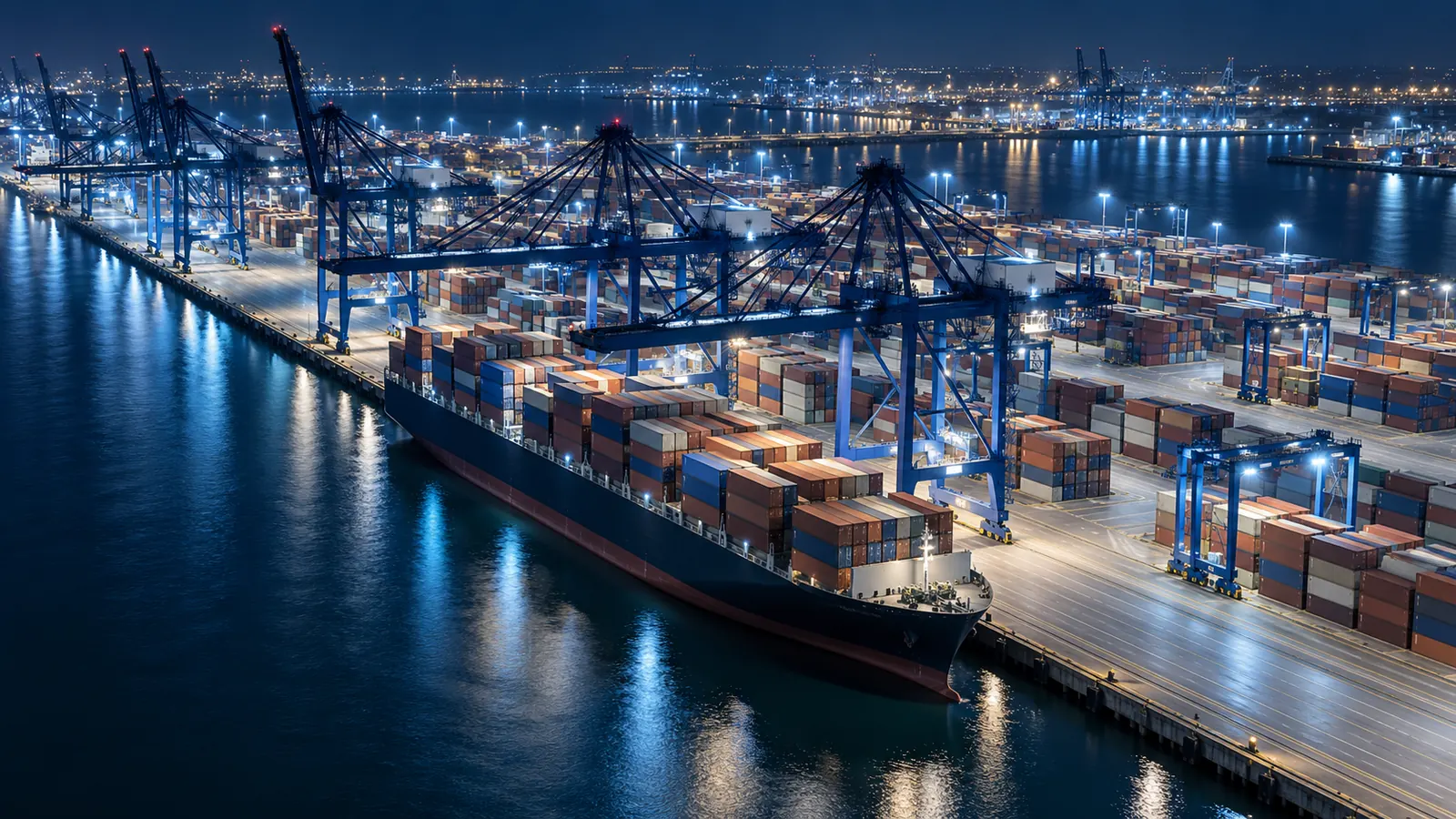
Direct shipment
Cargo goes from the origin port to the buyer's port and never touches Türkiye. This model gives the shortest lead time and the lowest handling cost.
Selling goods bought abroad to a buyer abroad, without importing them into Türkiye.
Transit trade is the sale abroad of goods purchased abroad, either without entering the Turkish customs territory or after entering it under the transit or customs warehousing procedure.
There are three parties: the foreign supplier that makes or sells the goods, the Turkish transit trader that buys and resells them, and the foreign buyer. The purchase and the sale run on two separate contracts and two separate payment flows.
Goods are usually shipped directly from the country of origin to the buyer's country. The role of the Turkish company is to find the supply, set the commercial terms, manage payment and documents and coordinate the shipment.
Cargo goes from the origin port to the buyer's port and never touches Türkiye. This model gives the shortest lead time and the lowest handling cost.
Cargo arrives at a Turkish port, free zone or bonded warehouse under the transit or warehousing procedure; it can be consolidated, split or repacked and then sent on to the buyer.
Products from different countries are managed with one counterpart and one contract structure.
Methods such as letters of credit or cash against documents balance the risk of both buyer and manufacturer.
Direct shipment removes intermediate unloading and storage and shortens lead times.
Manufacturers reach markets they cannot reach alone; buyers reach manufacturers they could not find alone.
Product code or technical specification, quantity, target price, destination and the required Incoterm are defined.
Suitable manufacturers are compared on price, lead time, quality and document capability.
A sales offer is made to the buyer; on approval the purchase and sales contracts are set up separately.
Advance payment, cash against documents or letter of credit is agreed separately for each side.
Production, packing, marking and loading schedule are tracked together with the supplier.
Commercial invoice, packing list, bill of lading, certificate of origin and, where needed, analysis or conformity certificates are prepared and checked.
Documents go to the buyer or the bank, the goods are collected and the payment flow is closed.
Not necessarily. In most deals the goods are shipped directly from the origin country to the buyer's country. When needed, they can be transshipped through a Turkish port, free zone or bonded warehouse under the transit or warehousing procedure.
In export, goods in free circulation in Türkiye are sold abroad. In transit trade, goods are bought abroad and sold abroad again without being imported into Türkiye.
Depending on the deal size and the parties, we use common international methods such as advance payment, cash against documents and letters of credit. The method is agreed in writing at the offer stage.
Product name or code, technical specs, quantity, destination country and city, the required Incoterm (FOB, CIF etc.) and the target delivery date. A specification sheet or sample photo speeds things up.
It depends on the product group and the manufacturer's minimum order quantity. Send your request and we will state the lowest workable quantity in our offer.
For every deal we assess the product, the parties and the destination against applicable foreign trade law, export control and sanctions rules. We do not accept non-compliant transactions.
Tell us the product, quantity and destination country; we will prepare a sourcing and shipping plan for you.